When we live with conditions like Crohn’s disease, ulcerative colitis, or fibromyalgia, we become experts at talking about the physical. We can list our medications, describe our pain levels on a scale of one to ten, and explain the mechanics of a stoma without blinking.
But when it comes to the mental toll, the PTSD from traumatic inpatient stays, the chronic pain “fog”, or the sheer exhaustion of living in a body that feels like a battlefield, the words often fail us.
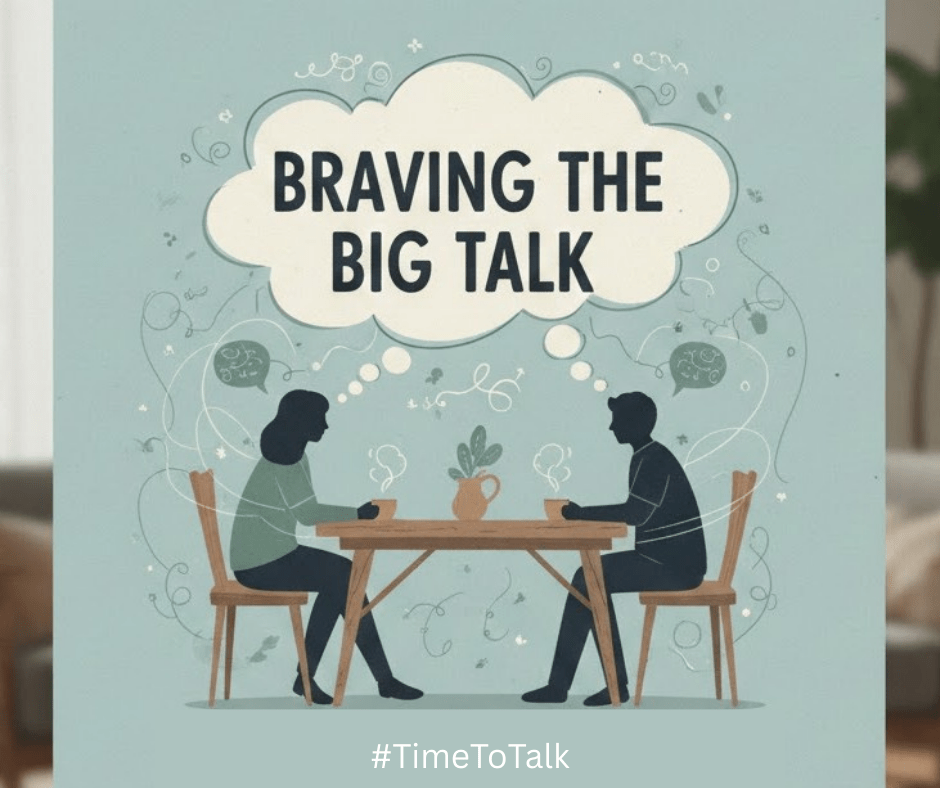
Today is Time to Talk Day. This year, the theme is “Brave the Big Talk”, and I want to offer a bit of perspective on what that actually means for our community.
The weight of the unspoken
For many of us, the “Big Talk” isn’t just about saying we’re stressed out. It is about admitting that we are mourning the life we had before diagnosis. It’s about the anxiety of being too far from a toilet, the isolation of a “good day” that no one else understands, and the mental fatigue of constantly advocating for our own care!
It’s not abnormal to feel pressure to perform. To be inspiring or to show that we are winning against our chronic disease. But sometimes, the bravest thing you can do is admit that you aren’t okay, even if you don’t have a poetic way to say it.
Personally, I think true advocacy is about authenticity and honesty. It’s about showing up, as you are, and knowing that’s good enough. And actually, that’s a potentially validating post for someone who needs it, too.
You don’t need a script
The beauty of Time to Talk Day is that it is meant to be a conversation, not a presentation. You don’t need to have the clinical terminology or a perfectly wrapped-up story.
If you are a friend or family member of someone with a chronic illness, your role isn’t to “fix” them. Often, the most powerful thing you can do is just listen. You don’t need to provide a solution; you just need to provide a safe space.
A seat at the table for mental health
As I often say to the healthcare and pharma partners I work with, we cannot treat the body without acknowledging the mind. The “emotional data” of a person is just as important as their blood work.
So, today, whether you are having a conversation over a cuppa, sending a quick text to a friend, or simply acknowledging your own feelings in a journal, remember that your voice matters.
I would love to hear from you today. If you were “braving the big talk”, what is one thing about the mental side of your journey that you wish people understood more?
 Sahara Fleetwood-Beresford | Patient Advocacy